
The DTF cost per shirt is not one number. It is a stack of costs that includes the transfer, blank garment, labor, shipping, packaging, fees, waste, and the cost of replacing mistakes or damaged items.
To price a finished garment profitably, calculate the cost of producing one sellable shirt first. Then choose a selling price based on your sales channel, target contribution margin, and expected overhead.
Quick answer: How do you calculate DTF cost per shirt?
Use this formula:
DTF cost per shirt = transfer cost + blank garment + labor + waste allowance + inbound shipping + packaging + selling fees + allocated overhead
For example, an illustrative unit-cost calculation might look like this:
- Blank shirt: $4.50
- DTF transfer: $1.20
- Labor and handling: $1.75
- Waste and test presses: $0.50
- Inbound shipping: $0.35
- Packaging and labels: $0.45
- Payment or marketplace fees: $0.80
- Marketing and replacement allowance: $1.00
Illustrative total cost per shirt: $10.55
That $10.55 is not a universal industry price or a SpeedE Transfers rate. It is a method you can replace with your own numbers.
What is included in DTF cost per shirt?
What is a cost per shirt?
What is a cost per shirt? A cost per shirt is the total amount required to produce and sell one finished garment, not just the price of the DTF transfer.
What is gang sheet cost per transfer?
What is gang sheet cost per transfer? Gang sheet cost per transfer is the total sheet price divided by the number of usable transfers placed on that sheet.
For example, a $10 sheet containing ten usable designs has a base transfer cost of $1 per design before shipping, waste, and handling. If the same sheet contains only five usable designs, the effective transfer cost becomes $2 per design.
What is landed cost?
What is landed cost? Landed cost is what an item costs after it reaches your operation, including the purchase price, inbound freight, and other costs required to receive it.
For apparel decoration, landed cost can apply to blank garments, transfers, packaging supplies, or equipment-related materials.
What is contribution margin?
What is contribution margin? Contribution margin is the money left from a sale after subtracting the costs that directly change with that sale.
Contribution margin = selling price − variable cost
It helps you decide whether each shirt contributes enough toward rent, software, equipment, payroll, and profit.
What is a size curve?
What is a size curve? A size curve is the planned quantity of each garment size in a production run, such as small, medium, large, XL, and 2XL.
A size curve prevents you from ordering a flat number of every size when your customers are more likely to purchase some sizes than others.
How do you calculate DTF cost per shirt step by step?
Start with actual invoices and time measurements instead of relying on a generic price range.
1. Calculate the transfer cost
Use the amount you paid for the transfer, then add the portion of shipping assigned to that order.
If you use a gang sheet, divide the sheet price by the number of usable transfers. Do not divide by the number of artwork files unless every file produces one sellable transfer.
A layout with eight large graphics and twelve small logos has twenty designs, but those designs do not necessarily carry the same value or use the same amount of film. For more accurate costing, group designs by placement and size.
2. Add the blank garment
Blank cost changes based on:
- Brand and garment quality
- Shirt color
- Fabric blend
- Size
- Quantity ordered
- Distributor shipping
- Special finishes or garment styles
A 2XL or 3XL may cost more than a standard medium. Dark or specialty garments may also have different pricing than basic white or natural-color shirts.
Use the current product information from your blank supplier, such as the BELLA+CANVAS wholesale garment resources and Gildan apparel resources, when comparing styles, colors, sizes, and availability.
3. Assign labor to each shirt
Labor includes more than pressing the transfer. Depending on your workflow, it may include:
- Pulling the correct blank
- Checking the garment for defects
- Positioning the transfer
- Pressing and peeling
- Repressing when required
- Folding
- Adding tags or labels
- Packaging
- Inspecting the finished shirt
- Handling the order or shipment
Calculate labor with this formula:
Labor per shirt = minutes spent per shirt ÷ 60 × hourly labor rate
If a worker earns or costs the business $24 per hour and spends six minutes on one shirt:
6 ÷ 60 × $24 = $2.40 labor per shirt
Use your fully loaded labor cost if possible. That may include payroll taxes, employer costs, or contractor expenses.
4. Add waste and test presses
Set aside a realistic allowance for:
- Misaligned transfers
- Incorrect garment sizes
- Artwork errors
- Misprints
- Pressing mistakes
- Garment defects
- Customer replacements
- Test presses for new blanks or placements
Do not hide this cost. If you regularly lose one shirt out of a production run, the sellable shirts must carry that loss.
5. Allocate shipping, packaging, and fees
Divide inbound shipping across the number of units received. Then add the cost of:
- Poly mailers
- Folded garment bags
- Hang tags
- Woven labels
- Stickers
- Tissue paper
- Shipping labels
- Payment processing
- Marketplace commissions
- Customer acquisition
Marketing cost is easy to ignore because it may not appear on the production invoice. However, if you spend money to acquire customers, that cost belongs in your pricing model.
Illustrative DTF cost per shirt build-up
The first six rows represent an illustrative landed production cost of $8.75. The final rows help estimate the real cost of selling the shirt through a customer-facing channel.
Which ordering method gives the lowest transfer cost?
There is no single cheapest method for every order. The right choice depends on your design size, quantity, repeat frequency, and how efficiently you use the available film.
SpeedE’s current DTF by the inch product lists $0.65 per inch. Review the product page and checkout details for the current calculation method before placing an order. The DTF by the inch option can be useful for small runs, exact-size graphics, sleeves, pocket logos, and test orders.
SpeedE gang sheets start at $10, but the effective cost per transfer depends on how many usable designs fit on the sheet. A partially filled sheet can cost more per design than a densely nested sheet.
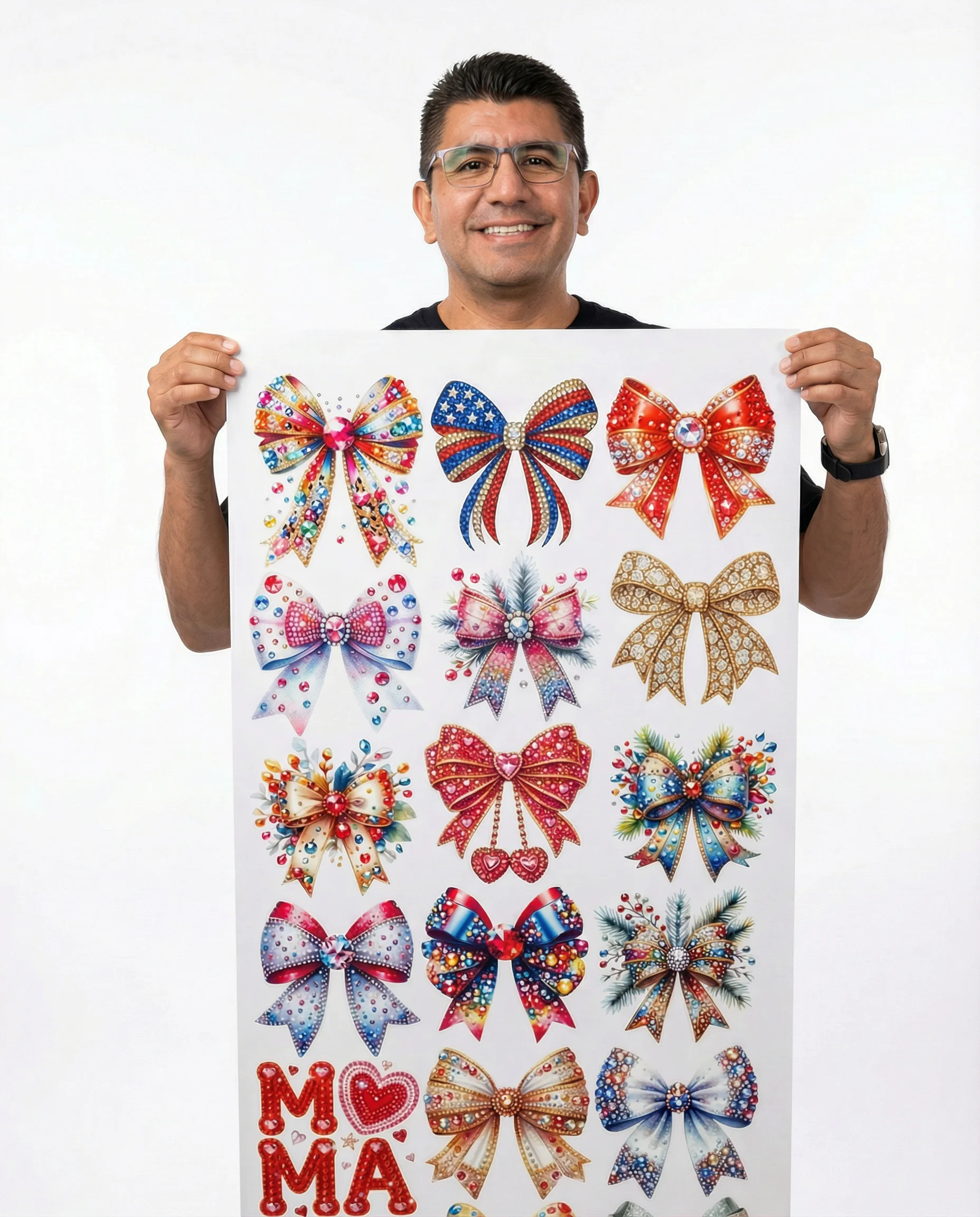
For several repeat designs, use the DTF gang sheet builder or upload your own finished gang sheet. Leave at least 0.25 inch between designs and maintain a safe margin around the sheet edges. SpeedE’s standard gang sheet width is 22.5 inches; confirm the current usable printable area before finalizing a layout.
For one-off work, individual transfers may be simpler. SpeedE offers no minimum orders, so you can test a design without committing to a large quantity.
Why does gang sheet cost per transfer change?
Gang sheet cost per transfer changes because the sheet price is fixed while the number of usable designs can vary.
Consider two illustrative layouts:
- A $20 sheet with 20 usable transfers equals $1 per transfer.
- A $20 sheet with 10 usable transfers equals $2 per transfer.
The second layout may still be the correct choice if it contains large back prints. The goal is not to force every design into the smallest possible space. The goal is to use the sheet efficiently without creating cutting problems, undersized artwork, or difficult pressing work.
Professionals usually place the largest designs first. Then they use remaining space for sleeve graphics, neck labels, pocket logos, or smaller repeat designs. Tight spacing can reduce material waste, but designs still need enough separation to cut and handle safely.
For a closer look at the method, review SpeedE’s gang sheet cost comparison guide.
Which blank garment costs should you include?
The blank is often a larger cost than the transfer, especially when the transfer is a small chest logo. A $1 transfer does not make a shirt inexpensive if the garment costs $6, requires extensive labor, or has a high replacement rate.
Track blank costs by style and size rather than using one average number for every product. At minimum, separate:
- Standard adult sizes
- Extended sizes
- Youth garments
- Hoodies and heavier garments
- Premium fashion blanks
- Performance or specialty fabrics
Color can affect both the purchase price and the retail price you can support. A premium garment in a desirable color may justify a higher finished price, but only if your customer sees the difference.
Use SpeedE’s DTF transfer size chart and sizing guidance before ordering artwork. An oversized print can increase transfer cost, labor time, and the chance of placement errors.
How many shirts should you order in each size?
Do not automatically order the same quantity of every size. Build a size curve based on your actual sales history, preorder data, audience, or event requirements.
For a first launch, use a conservative quantity and record what sells. The most common planning problem is running out of medium and large while holding extra inventory in less requested sizes. That does not mean every brand should use the same curve.
Illustrative 48-shirt size curve
This is an example for planning, not a recommended universal ratio. If you have preorder data, use it. If you sell primarily at a local event, review the audience and past transactions. If you sell online, watch which sizes convert and which remain in stock.
A size curve also affects your DTF cost per shirt. Ordering extra blanks that never sell ties up cash and may create dead stock. At the same time, ordering too few popular sizes can cause missed sales or expensive replacement orders.

How do you turn cost into a profitable selling price?
First decide whether you are calculating gross margin or contribution margin.
Gross margin usually looks at revenue minus the direct cost of goods sold. Contribution margin goes further by subtracting variable selling costs, such as payment fees, marketplace commissions, packaging, and certain marketing expenses.
Use this target-margin formula:
Selling price = cost ÷ (1 − target margin)
If your planned cost is $10.55 and your target margin is 50%:
$10.55 ÷ (1 − 0.50) = $21.10
That price leaves $10.55 before fixed overhead and produces a 50% margin against the stated cost.
Illustrative pricing tiers
The following table uses hypothetical costs and prices. It is not a SpeedE price list or a required pricing structure.
Wholesale pricing must leave room for the retailer’s margin. It should also account for order handling, packing, payment terms, and possible replacements.
Direct-to-consumer pricing can support a higher price when the product includes strong branding, photography, packaging, and customer service. Marketplace pricing must absorb platform fees and may require promotional discounts.
Keep pricing consistent across channels when possible. Large unexplained differences can weaken customer trust and make a brand difficult for retailers to sell. This is a business-planning framework, not legal or tax advice.
What most brands get wrong about DTF cost per shirt
The most common mistake is pricing from the transfer alone.
A business owner sees a $1.20 transfer and assumes the shirt costs about $1.20 plus a blank. That calculation leaves out the time and expenses required to turn a transfer into a product customers can buy.
We also see these problems often:
- Ignoring labor: Pressing, folding, checking, and packing take time.
- Using the cheapest blank for every product: A low-cost shirt may not match the fit or feel your customer expects.
- Overfilling a gang sheet: Designs placed too close together can be difficult to cut safely.
- Leaving too much empty space: A partially used sheet raises gang sheet cost per transfer.
- Forgetting shipping allocation: Small orders can carry a surprisingly large freight cost per unit.
- Using one price for every size: Extended sizes may have higher blank or transfer costs.
- Ordering a flat size quantity: Dead stock often comes from guessing instead of measuring demand.
- Leaving out fees: Payment processors and marketplaces reduce the amount you keep.
- Treating every replacement as unusual: Build a modest replacement allowance into your model.
- Failing to update costs: Supplier prices, shipping, packaging, and ad costs can change.
Professionals review a product by channel and by garment style. They know the cost of a basic tee sold directly is different from the cost of a premium hoodie sold wholesale.
Practical pre-order checklist
Before ordering transfers or blanks, confirm:
- Final garment style, color, and size range
- Current blank cost by size
- Transfer dimensions at final print size
- Transfer method selected
- Gang sheet spacing and edge margins
- Number of usable transfers on the sheet
- Transfer shipping allocation
- Expected pressing and handling time
- Packaging and label cost
- Payment or marketplace fees
- Marketing or customer acquisition allowance
- Replacement and damage allowance
- Planned size curve
- Wholesale, retail, and promotional prices
- Target contribution margin
- Care instructions appropriate for the finished garment
When selling apparel, provide accurate care information supported by a reasonable basis. The FTC’s care-labeling guidance explains general requirements for clothing care instructions. Treat it as business guidance, not legal advice, and consult a qualified professional if you have compliance questions.
Frequently asked questions
What is the average DTF cost per shirt?
There is no reliable single average because the result changes with the blank, transfer size, labor rate, order volume, shipping, fees, and selling channel. Calculate your own DTF cost per shirt from actual invoices and time records. A small chest print on a basic tee will have a different cost than a large back print on a premium hoodie.
Is DTF cheaper than screen printing per shirt?
It depends on the quantity, number of colors, artwork, setup, labor, and production method. DTF can be practical for short runs and multiple full-color designs, while other methods may have different economics at larger quantities. Compare the complete cost per finished garment rather than comparing only the transfer or setup charge.
Does the blank cost more than the DTF transfer?
Often, yes, especially when the design is a small chest or sleeve print. However, a large full-front or back transfer can become a significant portion of the unit cost. Include the blank, transfer, labor, shipping, packaging, waste, and selling fees before deciding which component has the greatest effect on profit.
How do I price a DTF shirt for wholesale?
Start with the complete variable cost, including the blank, transfer, labor, packaging, and expected replacements. Then set a wholesale price that leaves your business a contribution margin while giving the retailer room to mark up the product. Review payment terms, shipping responsibility, minimum quantities, and size-based costs separately.
Should I order individual transfers or a gang sheet?
Order individual transfers when you need one design, a replacement, or a one-off piece. Choose a gang sheet when you have several designs or repeat placements that can share the same sheet efficiently. Compare the delivered sheet price divided by usable transfers. A partially filled sheet may eliminate the expected savings.
How many extra shirts should I print for waste?
Do not use a universal percentage without reviewing your own process. Start by recording misprints, garment defects, pressing errors, and replacements over several production runs. If your process is new, print a small test quantity first and reserve enough material to handle known risks without creating unnecessary dead stock.
Does a gang sheet lower the cost per shirt?
It can, but only when the sheet is used efficiently. A densely nested sheet can reduce the base transfer cost per design, while a partially filled sheet may increase it. Include spacing, edge margins, cutting time, shipping, and unusable designs in your calculation instead of dividing the sheet price by every file placed on it.
How should I include marketplace fees in my shirt price?
Add payment processing, marketplace commissions, listing fees, and expected promotional discounts to the variable cost of the sale. Then calculate the contribution margin using the amount you actually receive, not only the displayed retail price. Review the calculation whenever platform fees or your advertising strategy changes.
Turn your calculation into an order
Once you know your target transfer size, quantity, size curve, and acceptable unit cost, choose the ordering method that fits the run.
SpeedE Transfers provides custom DTF transfers, gang sheet options, no minimum orders, nationwide shipping, and Austin local pickup. Qualifying orders placed before 12 PM CST may be eligible for same-day printing. The company is family-owned and operated in Austin, Texas, with production printed in Texas rather than outsourced.
If you are ready to convert finished artwork into ready-to-press transfers, start with custom DTF transfers for your apparel line. For recurring production, review wholesale DTF transfer options. You can also compare the published Austin transfer pricing, which covers transfer pricing: not the complete per-shirt business calculation explained in this guide.
Follow SpeedE Transfers on Instagram for product examples and production updates.
Conclusion
The right DTF cost per shirt includes much more than the transfer. Add the blank, labor, waste, shipping, packaging, fees, marketing, replacements, and size-curve risk before setting a price.
Then separate wholesale, direct-to-consumer, and marketplace pricing. Use your actual costs, review them regularly, and choose gang sheets or individual transfers based on how efficiently each order uses material. A defensible price is one that covers the full unit cost and contributes toward the rest of your business.