
Friday Flash Sale
FRIDAY, NOVEMBER 27
25%
OFF DTF PRODUCTS
Use coupon BLACKFRIDAY25
FRIDAY, NOVEMBER 27
25%
OFF DTF PRODUCTS
Use coupon BLACKFRIDAY25
SATURDAY, NOVEMBER 28 – SUNDAY, NOVEMBER 29
20%
OFF DTF PRODUCTS
Use coupon WEEKEND20
Austin, Texas • Professional van branding
van wraps Austin businesses use turn cargo vans, service vans, delivery vans, and passenger vans into clear advertising. Each van wrap Austin TX project combines vehicle-specific design, custom van graphics, and professional installation.
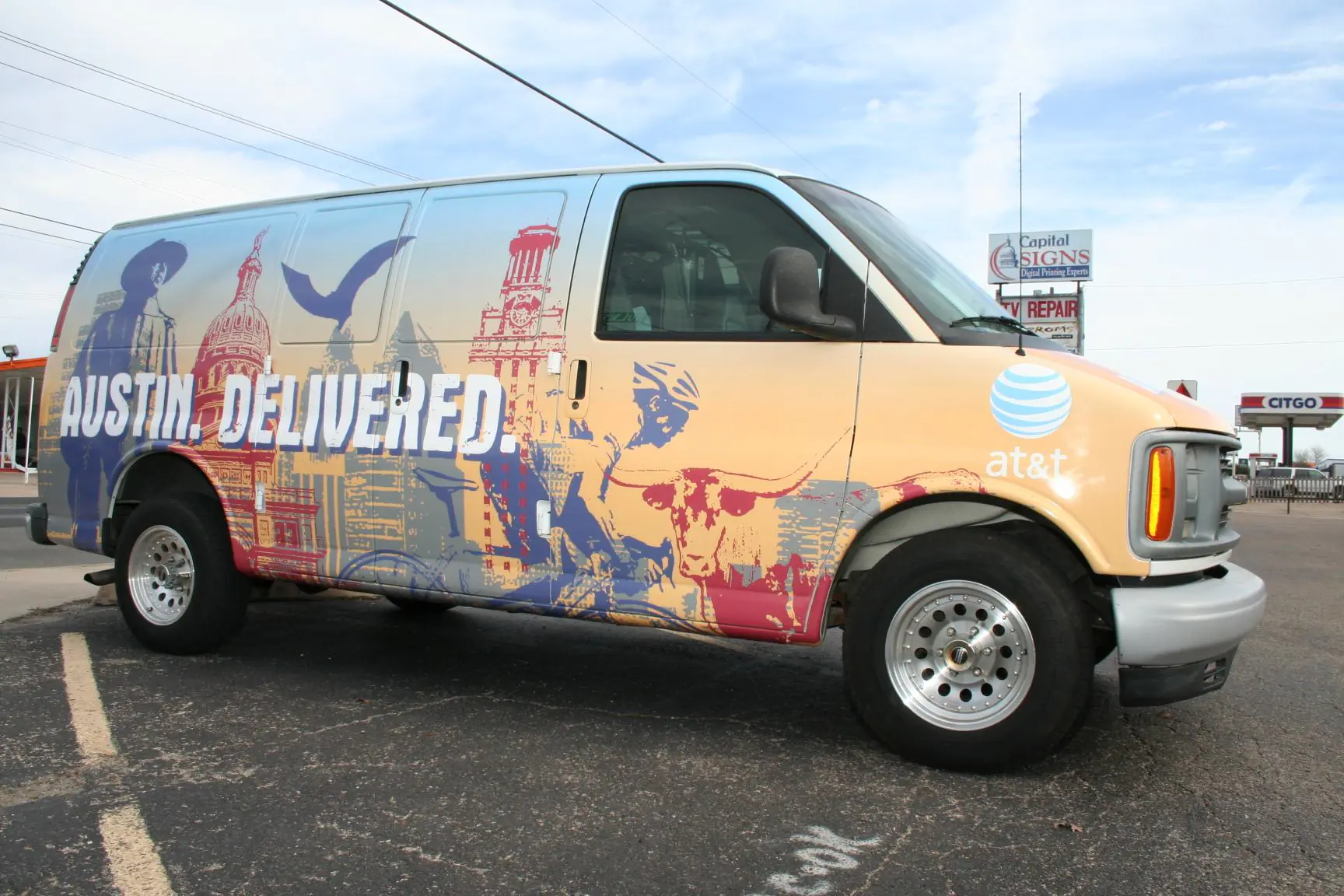 Austin Delivered commercial van graphics • Austin, TX
Quick answer
van wraps Austin companies use are custom vinyl graphics applied to compatible van surfaces for branding, advertising, identification, or a visual color change. A professional project covers van inspection, measurements, design, proofing, material selection, surface preparation, installation, and final quality control.
Wrap service life varies with film, exposure, panel direction, installation, washing, and storage. For independent maintenance guidance, see the official 3M vehicle wrap care guide and Avery Dennison vehicle graphics care guide.
Explore our related commercial vehicle wraps in Austin, compare Austin vinyl wrap options, review fleet wraps for multiple vehicles, or request a van quote.
A working brand asset
Consistent colors, logos, and messages help customers recognize your team across neighborhoods, job sites, deliveries, and daily routes.
Vehicles carry your service message while driving and continue working as visible branded assets while parked.
Coordinated graphics can make mixed vehicle types feel like one professional fleet without forcing every layout to be identical.
Documented design rules make it easier to add vehicles later while preserving color, logo placement, and message hierarchy.
Full wraps, partial wraps, lettering, and spot graphics give businesses several ways to balance visual impact and project scope.
Local planning simplifies vehicle inspection, proof review, scheduling, drop-off, and quality-control conversations.
Built around the vehicle
A strong van design respects body lines, doors, equipment, usable display area, and the short viewing time available in traffic.
Use broad side panels for the logo, primary service, contact method, and high-contrast brand elements.
Plan around ladder racks, roof equipment, sliding doors, handles, access points, and safety markings.
Create strong recognition at the side and rear while keeping route, loading, and door operation practical.
Use the added vertical space carefully so key information remains within normal road-level sightlines.
Balance branding with window locations, local visibility rules, doors, trim, and required operational details.
Simplify the message for smaller panels while preserving logo prominence, contrast, and one clear response method.
Coverage planner
| Coverage | Best suited to | Primary planning need |
|---|---|---|
| Full wrap | Maximum transformation and continuous branded coverage | Panel mapping, message hierarchy, and surface assessment |
| Partial wrap | High impact using vinyl plus the factory paint color | A design that integrates cleanly with uncovered areas |
| Spot graphics | Logos, service identifiers, unit numbers, and contact details | Legibility, consistent placement, and concise copy |
| Lettering package | Simple identification and operational information | Readable type, contrast, and repeatable measurements |
| Mixed package | Fleets with different vehicle roles or budget priorities | Shared visual rules across several coverage levels |
Fast recognition
The best van branding services work as a family: clearly related at a glance, carefully adapted up close.
Concept to road-ready
Confirm year, make, model, roof height, wheelbase, surface condition, repairs, coatings, accessories, and existing graphics.
Map the message around side and rear doors, handles, hinges, windows, body lines, trim, sensors, and roof equipment.
Verify spelling, contact details, colors, coverage, placement, and vehicle assignment before production begins.
Prepare the surface, apply and finish the film, inspect edges and alignment, then provide care guidance.
Readable on the road
Make the company name and logo recognizable before adding supporting service information.
Prioritize one service statement and one response method instead of covering the van with small text.
Separate words from backgrounds and preserve generous spacing so information remains readable while moving.
For commercial van wraps Austin businesses use daily, test the proof at reduced size. If the company, service, and response method cannot be recalled quickly, simplify the layout.
Quote readiness
Quality control
| Checkpoint | Before production | During rollout |
|---|---|---|
| Vehicle identity | Match proof to year, model, body, and unit number | Confirm the arriving vehicle against the work order |
| Brand assets | Use approved logo, color, font, and copy files | Compare finished units with the approved system |
| Contact details | Verify phone numbers, URLs, and service claims | Inspect legibility from normal road-viewing distance |
| Surface condition | Flag paint, repair, coating, rust, and removal concerns | Document discovered conditions before installation |
| Future expansion | Save specifications and source artwork | Photograph final placement and record material details |
After installation
Use mild automotive soap, clean water, and soft tools. Abrasive brushes and harsh chemicals can shorten film life.
Address fuel, insects, bird droppings, sap, and road residue promptly using the material-specific care guidance.
Avoid directing close-range pressure at edges. Train drivers and fleet staff so care stays consistent across vehicles.
Local fleet partner
SpeedE Transfers is located at 500 Victor St #100, Austin, TX 78753. Our van branding services support local contractors, service companies, delivery teams, property professionals, and growing multi-vehicle brands.
Common questions
Pricing depends on vehicle sizes and conditions, quantities, coverage, material, design complexity, removal needs, and installation labor. An inventory-based quote is more useful than a generic per-vehicle figure.
No. A flexible design system can adapt to vans, trucks, SUVs, cars, and trailers while preserving recognizable brand rules.
Yes. Saving approved artwork, colors, placement rules, material notes, and final photographs makes future additions easier to coordinate.
A full wrap covers most compatible painted panels. A partial wrap uses strategic vinyl coverage and incorporates the factory paint into the layout.
Yes. A phased schedule can keep more vehicles in service. Timing depends on fleet size, unit availability, coverage, preparation, and shop capacity.
Service life varies with material, installation, climate, exposure, panel orientation, cleaning, storage, and maintenance. Follow the specific film and installer care guidance.
No. Film follows the surface underneath and does not repair damage. Rust, loose paint, clear-coat failure, and body damage should be evaluated before wrapping.
Often, yes. Removal time and paint risk depend on film age, exposure, adhesive condition, underlying paint, previous repairs, and removal method.
Provide vector logos, brand standards, approved colors and fonts, verified contact details, original high-resolution images, and any required compliance copy.
Yes. Unit numbers, locations, team identifiers, or specialized service labels can be integrated without breaking the shared van design.
Gentle hand-washing is generally preferred. Avoid abrasive brushes, aggressive chemicals, and close pressure at seams or edges. Follow material-specific instructions.
Send an accurate vehicle list, photos, desired coverage, brand files, surface notes, target timing, rollout priorities, and a reliable project contact.
Put your fleet to work
Send your van information, clear photos, brand files, coverage goals, operational schedule, and target date. SpeedE will help define a practical path from the first proof to the final unit.