
The surface decides
DTF = fabric
Heat-pressed onto apparel and compatible soft goods.
OR
UV DTF = hard goods
Pressure-applied to clean, smooth, rigid surfaces.
UV DTF VS DTF Transfers
UV DTF vs DTF transfers is a surface-first decision: standard DTF belongs on compatible fabric, while UV DTF belongs on clean, smooth hard goods. Choose by material first to avoid wasted transfers, damaged products, and unhappy customers.
Quick answer
What is the difference?
UV DTF vs DTF transfers comes down to the surface and application method. Standard DTF transfers are designed for fabric and require heat and pressure from a heat press. UV DTF transfers are raised, adhesive decals made for clean, smooth hard surfaces and apply with firm pressure—no heat press required. They are not interchangeable: use DTF for shirts and UV DTF for tumblers, glass, metal, plastic, ceramic, and similar hard goods.
Find your answer fast
Comparison control panel
Use this UV DTF vs DTF transfers guide to compare surfaces, application methods, care requirements, and common business uses.
The five-second decision
Touch the product. What is it made of?
For UV DTF vs DTF transfers, the product material determines the correct choice before artwork, color, or quantity.
👕
Choose standard DTF
For apparel and compatible fabric products that will bend, stretch, and go through laundry cycles.
- T-shirts and hoodies
- Uniforms and team apparel
- Fabric totes and aprons
- Many hats and soft goods
🥤
Choose UV DTF
For rigid products where an adhesive graphic can bond to a clean, nonporous or properly tested surface.
- Glass cans and tumblers
- Metal tins and bottles
- Plastic containers and cases
- Ceramic, acrylic, and packaging
Head-to-head
UV DTF vs. DTF at a glance
The UV DTF vs DTF transfers comparison below shows why these two products are not interchangeable.
| Feature | DTF transfers | UV DTF transfers |
|---|---|---|
| Best surface | Fabric and apparel FABRIC | Hard, smooth goods HARD GOODS |
| Application | Heat + pressure | Peel, position, rub, peel |
| Heat press | Required for reliable results | Not required |
| Texture | Flexible print layer | Raised, glossy decal feel |
| Typical care | Wash inside out; cold; low heat | Hand wash drinkware |
| Repositioning | Align before pressing | Difficult after contact |
| Popular business use | Clothing, merch, uniforms | Drinkware, packaging, gifts |
| Wrong use | Do not press onto plastic bottles | Do not apply to shirts |
Direct-to-Film for apparel
DTF bonds to fabric with heat.
In a UV DTF vs DTF transfers decision, choose standard DTF when the finished graphic must flex with apparel or another compatible textile.
Artwork is printed on PET film, backed with adhesive powder, cured, and supplied ready to press. Controlled heat and pressure bond the design to compatible fibers.
Full-color freedom
Print gradients, photographs, fine detail, and complex color without weeding vinyl.
Fabric versatility
Common uses include cotton, polyester, blends, and other tested garments in light or dark colors.
Made for laundry
Correctly applied SpeedE transfers are promoted for 50+ washes with proper garment care.
UV-cured graphics for hard goods
UV DTF sticks with pressure—not heat.
Choose the UV option in a UV DTF vs DTF transfers comparison when decorating tested glass, metal, acrylic, ceramic, plastic, or packaging.
UV-cured ink and adhesive are transferred onto a rigid surface using a carrier film. The result is a vibrant, slightly raised graphic with a polished look.
No heat press
Firm rubbing or a small squeegee activates contact across the full design.
Premium texture
The dimensional, glossy finish can make simple packaging and drinkware feel retail-ready.
More product types
Add branded jars, cases, signs, bottles, tins, and gifts without an apparel press station.
Test first.
Coatings, textures, curves, silicone, oily plastics, flexible materials, and low-energy surfaces can affect adhesion. Clean and test the actual product before a customer run.
Application workflows
Two products. Two different methods.
UV DTF vs DTF transfers also means pressure-applied adhesive graphics versus heat-pressed apparel transfers.
DTF: prepare
Pre-press the garment to remove moisture and wrinkles.
DTF: press
Apply the specified time, temperature, and even pressure.
DTF: peel
Follow the transfer’s peel direction, then complete any finishing press.
DTF: inspect
Check placement and adhesion around every edge.
UV: clean
Remove dust, moisture, oil, and residue from the hard surface.
UV: position
Align carefully before the adhesive makes full contact.
UV: burnish
Rub firmly across every part of the artwork.
UV: peel
Remove the top carrier slowly while checking adhesion.
Real-world example
One gym. Two transfer types.
A UV DTF vs DTF transfers plan can keep branding consistent across both apparel and matching hard goods.
A gym merch launch may need flexible DTF graphics for performance shirts and hoodies, plus UV DTF graphics for bottles and protein shakers.
Using both keeps the brand consistent across materials without forcing one transfer technology onto a product it was not made to decorate.
👕Shirt
DTF
DTF
🥤Bottle
UV DTF
UV DTF
🧥Hoodie
DTF
DTF
🫙Shaker
UV DTF
UV DTF
Avoid preventable failures
Common transfer mistakes
Most UV DTF vs DTF transfers failures begin with choosing the wrong product, skipping surface preparation, or ignoring application instructions.
Wrong surface
Never put UV DTF on a shirt or standard DTF on a hard plastic bottle.
Skipped preparation
Moist fabric and oily hard goods both interfere with dependable application.
Guessed settings
Press temperature, time, and pressure must match the transfer and garment.
Bad placement
UV DTF can be difficult to reposition after the adhesive contacts the surface.
No testing
Coatings, dyes, fabric finishes, curves, and texture can change the outcome.
Poor care advice
Tell apparel buyers to wash gently and drinkware buyers to hand wash.
Choose your product
Ready to make it?
Use the UV DTF vs DTF transfers distinction to order the product designed for your intended surface.
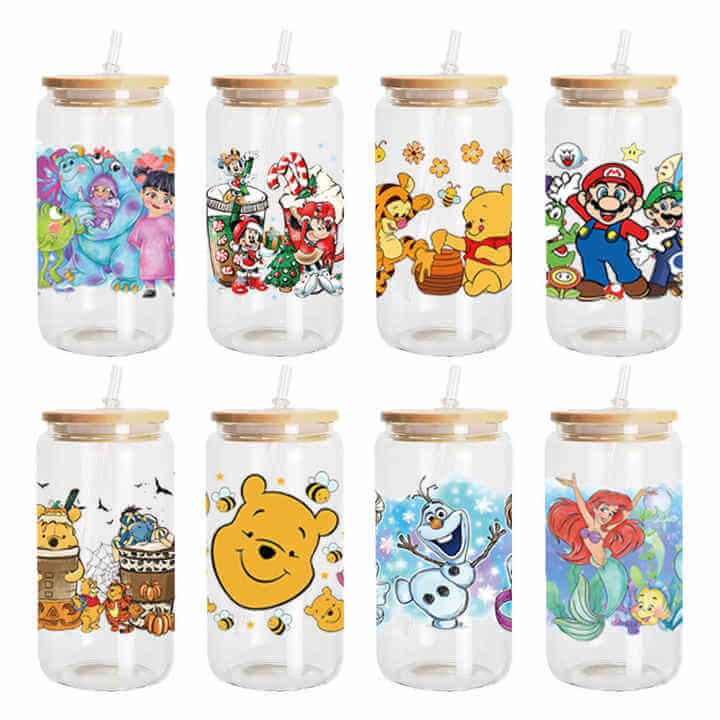
UV DTF transfers
For hard, smooth products such as drinkware, cases, packaging, acrylic, and tested metal or plastic items.
Shop UV DTF →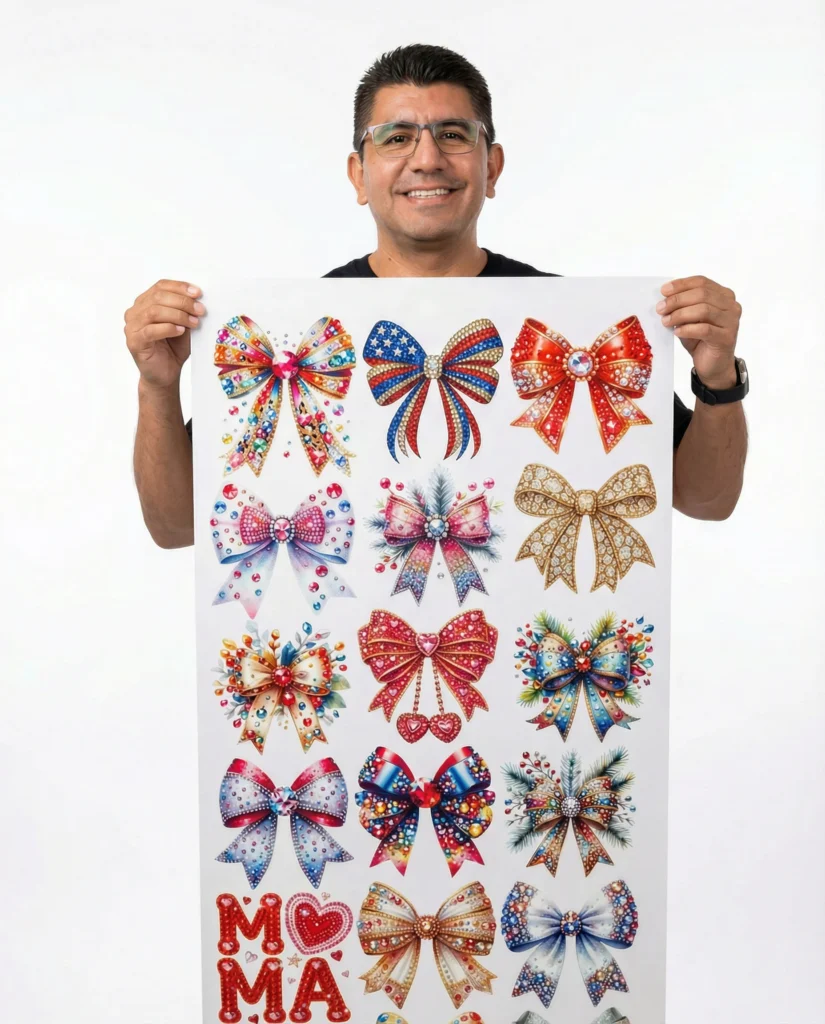
DTF gang sheets
For shirts, hoodies, uniforms, fabric totes, and other compatible heat-press products.
Build a gang sheet →Frequently asked questions
UV DTF and DTF answers
These UV DTF vs DTF transfers answers cover compatibility, application, durability, care, production, and ordering. Refer back to the UV DTF vs DTF transfers comparison whenever the intended surface changes.
Are UV DTF and DTF transfers the same?
No. DTF is heat-applied to fabric. UV DTF is pressure-applied to hard, smooth surfaces.
Can UV DTF be used on shirts?
No. It is not engineered to flex with fabric or withstand garment laundering. Use standard DTF for apparel.
Can standard DTF be used on tumblers?
No. Standard DTF requires heat and fabric fibers for its intended bond. Use UV DTF on compatible hard drinkware.
Does UV DTF require a heat press?
No. Clean the surface, position the transfer, rub it down firmly, and peel the carrier as directed.
Is UV DTF dishwasher safe?
Hand washing is recommended. Dishwasher heat and harsh detergents can weaken the adhesive and shorten the decoration’s life.
Can I use a household iron for DTF?
A heat press is strongly recommended because it provides controlled, even heat and pressure. A household iron is inconsistent.
What surfaces work with UV DTF?
Typical choices include smooth glass, metal, plastic, ceramic, acrylic, and coated packaging. Test the exact product first.
What fabrics work with DTF?
DTF is commonly used on cotton, polyester, blends, and many apparel fabrics. Test specialty coatings, sensitive materials, and dye-prone garments.
How long do DTF transfers last?
SpeedE advertises 50+ wash durability when transfers are correctly applied and garments receive proper care.
What is a gang sheet?
A gang sheet groups several graphics on one transfer sheet, helping use the printable area efficiently.
Does SpeedE Transfers have minimum orders?
No. SpeedE advertises no minimums for DTF transfer ordering.
How fast is production?
SpeedE promotes same-day printing for qualifying print-ready orders placed before 12 PM CST. Check current eligibility when ordering.
Material and care references
Helpful application resources
For more context alongside this UV DTF vs DTF transfers guide, review the Federal Trade Commission's care-labeling guidance and the U.S. Food and Drug Administration's information about food-contact safety before decorating products used with food or beverages.
Choose by surface
Fabric or hard goods? You’re ready.
Finish the UV DTF vs DTF transfers decision by using heat-applied DTF for apparel and pressure-applied UV DTF for compatible smooth, rigid products.
Still unsure? Ask SpeedE Transfers.