
Prepare artwork
Use clean, high-resolution files sized for the final placement.
Turn customer orders into vibrant apparel without betting your cash on piles of finished inventory. This practical guide maps the journey from artwork to doorstep.
Quick answer
Print on demand DTF is a lean apparel workflow in which a garment is decorated only after a customer orders it. A full-color design is printed as a Direct-to-Film transfer, then heat-pressed onto a blank shirt, hoodie, tote, or other compatible item. You can test more designs, carry fewer finished products, and replenish successful artwork as demand grows.
Jump to what matters
One repeatable system
Your exact tools may change, but a dependable print-on-demand operation follows the same five checkpoints.
Use clean, high-resolution files sized for the final placement.
Nest current orders on a gang sheet to use material efficiently.
Match pressure, time, and temperature to the garment and transfer.
Confirm placement, edges, color, adhesion, and garment condition.
Record the order, add care instructions, and send it on time.
Why the model works
Launch a small collection, learn what customers choose, then reorder the winners. Seasonal and niche ideas do not require a large decorated run.
DTF handles full color, fine detail, gradients, and complex artwork without separating every color into its own screen.
One transfer workflow can support many cotton, polyester, and blended items. Always test unusual coatings, dyes, or performance fabrics.
SpeedE Transfers offers no minimums, so a sample, replacement, or one-off customer order can fit the same system.
No weeding and no screen setup means the press station can shift between designs with fewer production steps.
Archive approved artwork, dimensions, placement notes, and press results so popular products remain consistent.
A lean stock strategy
Print on demand does not always mean zero inventory. A practical in-house model usually keeps a controlled selection of blank garments and orders transfers as sales arrive.
| Item | Best approach |
|---|---|
| Core blanks | Keep a small working quantity |
| Trend designs | Order after demand appears |
| Best sellers | Hold a transfer buffer |
| Premium sizes | Replenish from sales history |
| Finished garments | Produce against real orders |
Know the whole number
A healthy price covers every variable cost and leaves room for overhead, mistakes, marketing, and growth. Do not treat revenue as profit.
Blank and shipping prices change. Recalculate whenever a supplier, product, or fulfillment promise changes.
Protect every order
Press settings vary by garment, transfer, press, and environment. Test a sample before committing a customer’s item or a large batch.
Choose your starting lane
Use the path that matches your design volume and production confidence.
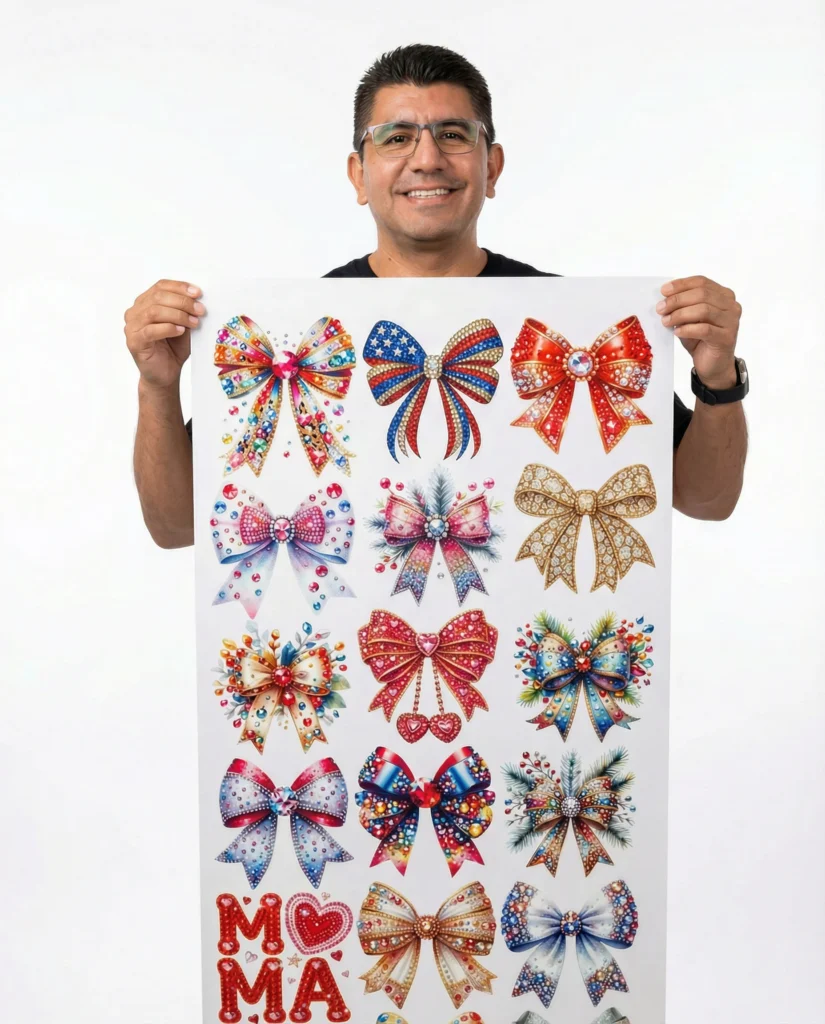
Arrange individual graphics in the browser when you want help controlling the sheet layout.
Open Gang Sheet Builder →
Best when your gang sheet is already print-ready, correctly sized, and checked for quality.
Upload Your Gang Sheet →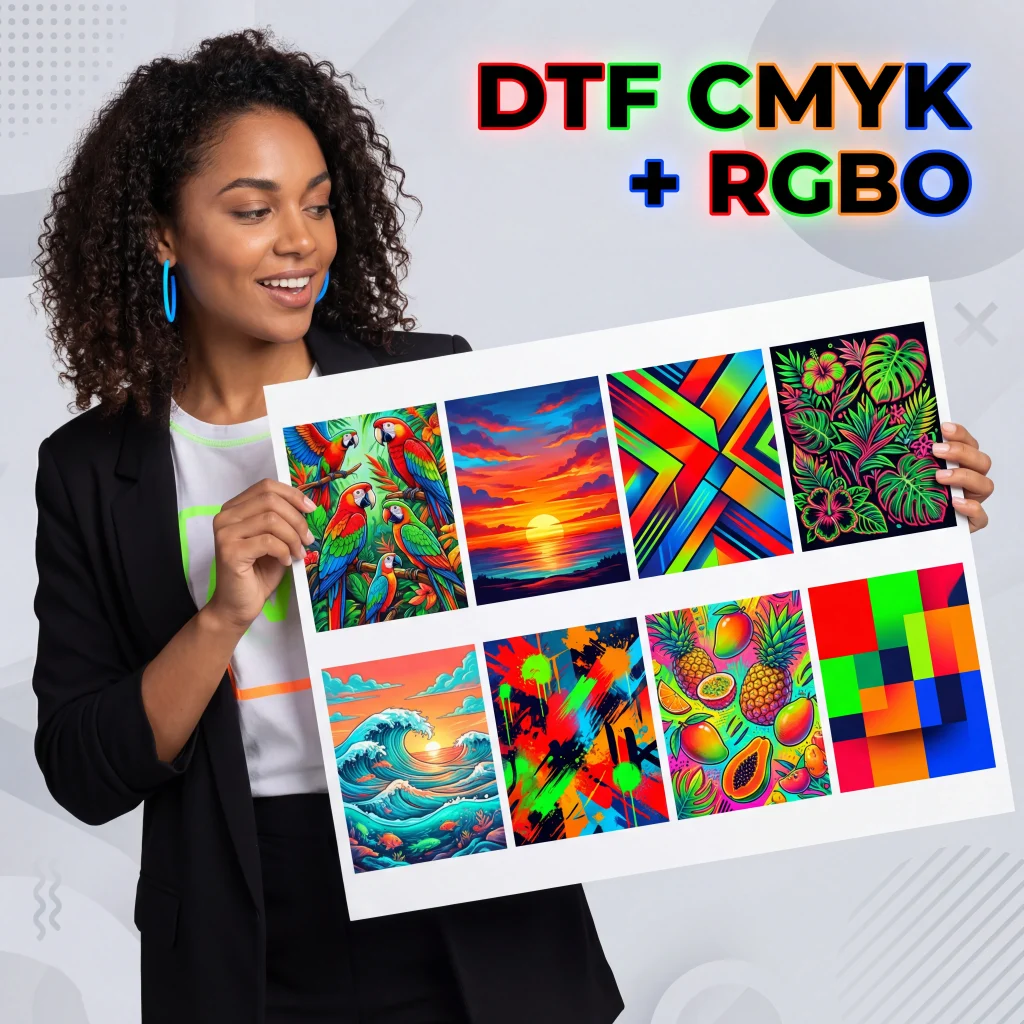
Explore expanded-color transfer options for artwork that benefits from especially vivid orange, green, or blue.
Explore CMYK + RGBO →Scale without chaos
Document each repeatable decision while order counts are manageable. Good records reduce remakes and make training easier.
Artwork version, print size, garment SKU, placement, press result.
Production time, defect rate, reorder frequency, and true margin.
Group similar garments and placements to reduce setup changes.
Retire weak sellers and stock proven designs more intelligently.
Frequently asked questions
No. You can order professionally printed transfers, then apply them with a quality heat press. This avoids maintaining a printer, ink system, film, powder, and curing setup.
Yes. DTF has no color-separation or screen setup requirement, making it practical for a single full-color design as well as larger batches.
At minimum, plan for a dependable heat press, a stable work surface, basic measuring and alignment tools, protective sheets, quality-control lighting, and packing supplies.
Keep a small buffer for proven best sellers when sales history justifies it. For new or seasonal designs, replenish in smaller quantities until demand becomes predictable.
A transparent PNG at the exact print dimensions and 300 DPI is a reliable choice. Check small text, fine lines, unwanted white backgrounds, and edge quality before ordering.
Yes. DTF includes a white ink layer that supports color on dark garments. Test the specific blank for dye migration, texture, and heat sensitivity.
It can work well on many polyester garments. Because dyes and finishes vary, test for migration and confirm that the fabric tolerates the necessary heat.
SpeedE Transfers states 50+ wash durability with proper application and care. Press accuracy, garment type, laundering, and artwork construction all influence the result.
Gang sheets combine multiple graphics on one sheet. Grouping live orders or commonly used designs can improve material use and reduce transfer cost per graphic.
Yes. Your storefront captures the order, while your production process turns it into a pressed and packed garment. Set realistic processing times and keep inventory records synchronized.
SpeedE advertises same-day production for qualifying print-ready orders placed before the 12 PM CST cutoff. Confirm current eligibility and shipping timing at checkout.
No. The company advertises no minimums, which supports sampling, single-customer orders, and small design tests.
Local pickup may be available at 500 Victor St #100, Austin, Texas 78753. Confirm that your order is ready before traveling.
Counting only the blank and transfer. Include labor, platform fees, packing, postage, defects, returns, customer service, overhead, and your required margin.
Your next order starts here
Turn approved designs into a repeatable fulfillment system with vibrant, ready-to-press DTF transfers and no minimum order.
Need guidance? Contact SpeedE Transfers or read the pressing guide.