SpeedE Transfers – Mobile Nav

🎉 New customers get 15% off their first order  ·  Same-day printing available — order before 12PM CST  ·  📞 (512) 799-0115


DTF Transfer Tips: 5 Pro Techniques for Perfect Pressing Every Time


3a732529 57d5 422b 84ab e0ab23e36acc

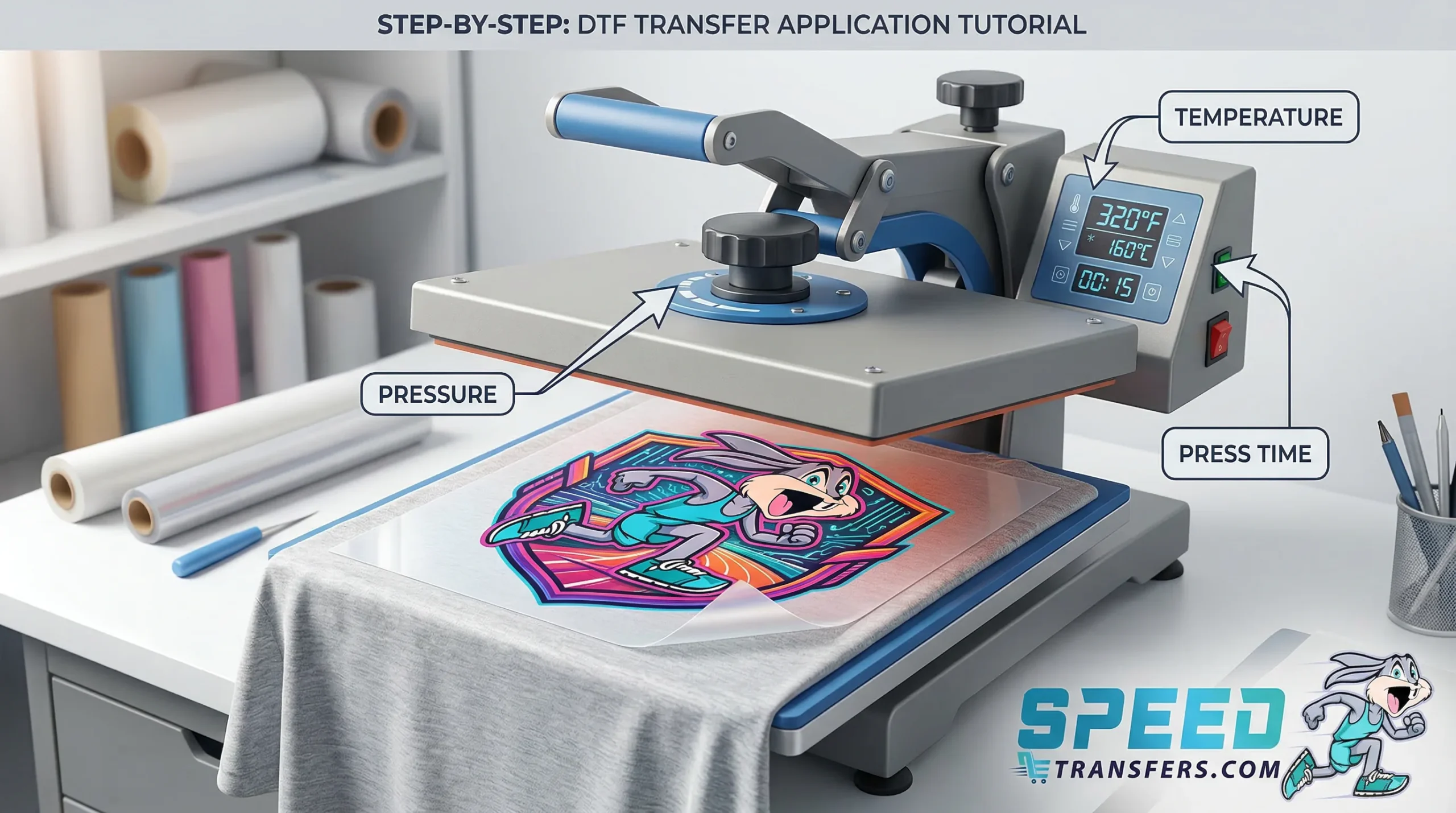
DTF transfer tips can make the difference between a flawless, professional print and a shirt that peels after one wash. Whether you’re dealing with ghosting, lifting edges, or inconsistent pressure, small adjustments in your pressing process and proper DTF heat press settings can dramatically improve results.

If you’ve ever wondered how to apply DTF transfers correctly or searched for a reliable DTF pressing guide, this breakdown will simplify the process. In this guide, you’ll learn 5 proven DTF transfer tips and DTF printing techniques used by professional printers to eliminate common mistakes and improve durability, alignment, and wash resistance.

ccc3cef2 5cf1 47d8 82ed c5ed5b3cca9a

Master Cold Peel Timing for Clean Results

One of the most important DTF transfer tips is understanding proper cold peel timing.

Peeling too early can cause lifting and ghosting. Peeling too late may affect surface smoothness.

The 3-Step Chill Check:

  • Wait 30–60 seconds after pressing.

  • Use an infrared thermometer and peel only below 80°F (27°C).

  • Test a small corner before removing the full film.

This ensures the adhesive has fully bonded to the fabric.

The Solution: The “3-Step Chill Check” Framework for Perfect Peeling.

An IR thermometer ensures your DTF is at the optimal temperature for peeling.

Pro Tip for DTF Crafters: Invest in an IR thermometer to precisely guarantee your cold peel temperature is below 80°F, ensuring professional, consistent results every single time.

Professional printers rely on DTF Transfer Tips to achieve flawless adhesion every time.

35d61aa4 6875 45e4 a582 265d734a5369

Always Pre-Press to Remove Moisture

Another critical DTF transfer tip is eliminating hidden garment moisture.

Even new shirts contain moisture that turns into steam during pressing, causing bubbles or weak adhesion.

Quick Pre-Press Guide:

Skipping this step is one of the most common beginner mistakes.

Pre-pressing is vital to eliminate moisture and ensure strong adhesion.

The Problem: Even seemingly dry garments, especially new ones, harbor microscopic moisture. During the intense heat of the press, this moisture rapidly converts to steam, creating tiny bubbles, unwanted texture issues, and significantly compromising the long-term adhesion and durability of your DTF transfer. This often leads to premature peeling and customer dissatisfaction.

The Solution: The 10-Second Moisture Purge Flowchart for Flawless Garment Prep.

A simple flowchart to guide your pre-press process.

Pro Tip for DTF Crafters: Make pre-pressing a non-negotiable step for EVERY garment. A 5-10 second purge followed by a lint roll ensures a moisture-free, fiber-free surface for superior DTF adhesion.

Following proven DTF Transfer Tips reduces waste and improves production efficiency.

e76edcb7 ecc5 4550 86c4 9274564107d9

Use the Business Card Test for Accurate Pressure

The Problem: Achieving the correct pressure is paramount for successful DTF transfers, yet “firm pressure” is often subjective and varies wildly between different manual heat presses. Insufficient pressure leads to uneven transfer adhesion and patchy results, while excessive pressure can squish the adhesive, causing bleed-out and an undesirable finish.

The Solution: Utilize a Standard Business Card as Your Precision Pressure Gauge.

Use a business card to accurately gauge your heat press pressure.

Pro Tip for DTF Crafters: Implement the “Business Card Tightness” test (tug hard, feel like ripping) to accurately set and verify firm, consistent, and even pressure across your heat press platen.

Using the right DTF Transfer Tips is what separates hobby-level results from professional production. When pressure, temperature, peeling, and curing are all controlled properly, DTF Transfer Tips ensure your designs stay vibrant, flexible, and durable even after repeated washing.

These DTF Transfer Tips are essential for long-term durability and wash resistance.

Align Transfers Precisely Every Time

28585ac1 0bb4 4e0a a03d b0cc84cc5763
Precision placement for multi-layer DTF designs.

The Problem: Applying multiple DTF transfers to a single garment—such as a large back design combined with a small chest logo, or intricate layered graphics—frequently results in crooked, misaligned, or off-center prints. This can significantly detract from the professional appearance of your finished product.

The Solution: The Painter’s Tape & Ruler Stacking Framework for Precision Placement.

A painter’s tape hinge ensures your transfer stays in place.
A ruler helps achieve consistent and symmetrical placement.

Pro Tip for DTF Crafters: Leverage a temporary center crease and a painter’s tape hinge for guaranteed straight and perfectly aligned DTF transfer placement every single time, even with complex multi-layer designs.

Mastering DTF Transfer Tips ensures every garment meets professional standards.

216d155b 6d28 4c12 9e90 d8cd092c7893

Never Skip the Second Press

Maximize Washability with a Proper Post-Press Cure

One of the most overlooked DTF transfer tips is the final curing step. Many printers assume the process is complete after the initial press and cold peel — but that’s only part of the application process.

Without proper post-press curing, the adhesive hasn’t fully bonded to the garment fibers. This often leads to premature cracking, fading, edge lifting, or peeling after just a few washes.

If you’re learning how to apply DTF transfers correctly, this step is non-negotiable.

The 5-Second Secondary Seal Method

This final press locks in durability and ensures long-term performance.

Step 1: Complete the Cold Peel
Make sure the transfer has cooled properly before peeling. (Refer back to the cold peel timing section above.)

Step 2: Use a Protective Cover Sheet
Immediately after peeling, cover the design with a PTFE (Teflon) sheet or silicone parchment paper. Never press directly onto the exposed print, as this can damage both the transfer and your heat press platen.

Step 3: Apply the Final Cure
Press again for 5 seconds using the same DTF heat press settings (temperature and pressure) as your initial application. This secondary heat cycle fully activates the adhesive and seals it into the fabric.

Why This Matters

When paired with correct pressure calibration and proper pre-press preparation, this final cure dramatically increases wash resistance and overall print lifespan.If you’re using high-quality, properly cured transfers, combining them with this post-press method ensures professional results every time.

Want Consistent, Long-Lasting Results?

Using premium transfers makes a difference. If you’re looking for reliable, ready-to-press designs that respond perfectly to proper DTF heat press settings, explore our DTF transfers and gang sheet options to improve durability and color performance from the start.

5b7db7c6 da56 4862 8b5b 2d4d490f4181

Elevate Your DTF Crafting to Professional Results

By consistently applying these proven DTF transfer tips, you’re not just improving your pressing technique — you’re strengthening the overall quality, durability, and reputation of your print work. From mastering cold peel timing to dialing in pressure and completing the final cure, each step plays a critical role in achieving professional-level results.

When your process is controlled and repeatable, you eliminate common issues like peeling, cracking, and ghosting — and that means fewer wasted transfers and happier customers.

If you’re looking to pair these techniques with high-quality, ready-to-press designs, explore our premium DTF transfers for consistent color, strong adhesion, and long-lasting performance.

By following these expert DTF Transfer Tips, you’re not just improving your workflow — you’re elevating the quality, durability, and consistency of every product you create. These DTF Transfer Tips help you avoid costly mistakes, reduce wasted transfers, and deliver results your customers will trust.

Follow Us for More DTF Tips & Updates: SpeedEtransfers.com

Leave a Reply

Your email address will not be published. Required fields are marked *