
Remove DTF Transfers Properly: Expert Advice from SpeedE Transfers
Remove DTF Transfers properly to avoid damaging your garments or leaving residue behind. Whether you made a mistake during pressing or want to replace an old design, this expert guide from SpeedE Transfers walks you through safe and realistic ways to remove DTF transfers from different fabrics.
If you’ve ever asked yourself, “Can I remove a DTF transfer?” you’re not alone. As professionals in the DTF industry, we frequently assist clients who need corrections on misapplied designs, test samples, or garments with defects. The short answer is yes — but removing DTF transfers is rarely simple because DTF is engineered to be permanent. Below is a detailed breakdown based on SpeedE Transfers’ real-world experience.
DTF Works on Many Fabrics…But That’s Part of the Challenge
DTF transfers adhere strongly to a wide range of materials:
- Cotton
- Polyester
- Blends
- Tricky synthetics like nylon
This versatility is what makes DTF printing so popular, but it also makes Remove DTF Transfers extremely difficult, especially on finished client garments. The stronger the bond, the higher the risk of fabric damage during removal.
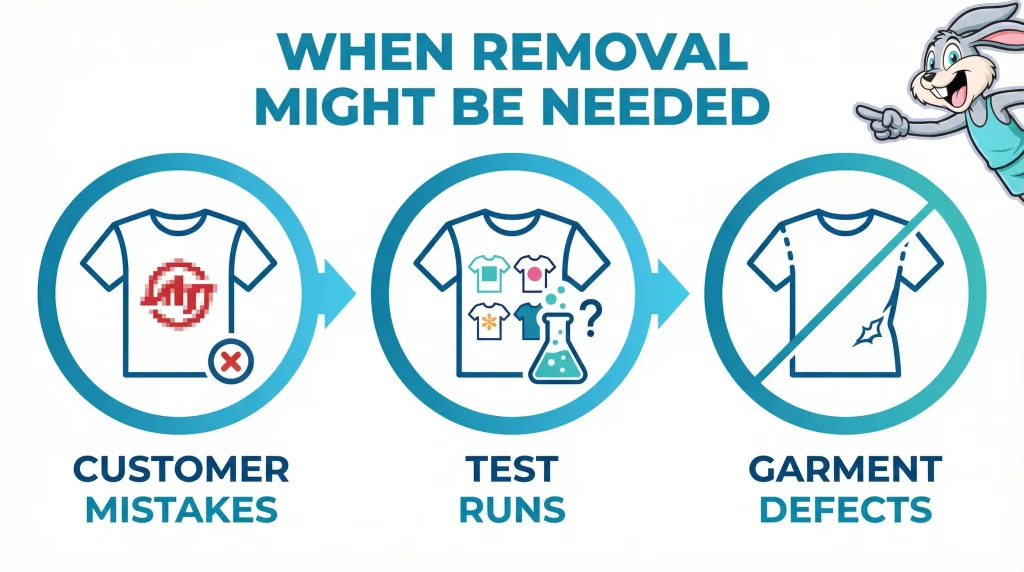
When Removal Might Be Needed
Remove DTF Transfers when mistakes happen or when a design no longer serves its purpose. Removal may be necessary if the transfer is misaligned, pressed at the wrong temperature, or applied to the wrong garment. Over time, DTF prints can also crack, fade, or peel, making removal the only option before reapplying a new design.
You may also need to Remove DTF Transfers when rebranding uniforms, correcting spelling errors, or upcycling old clothing. Using the right method helps protect the fabric while preparing a clean surface for reapplication.
Common scenarios include:
- Customer mistakes: Wrong design or placement
- Test runs: Sample garments before bulk orders
- Garment defects: Misaligned seams or flawed fabric
Even in these cases, careful planning and experience are essential.
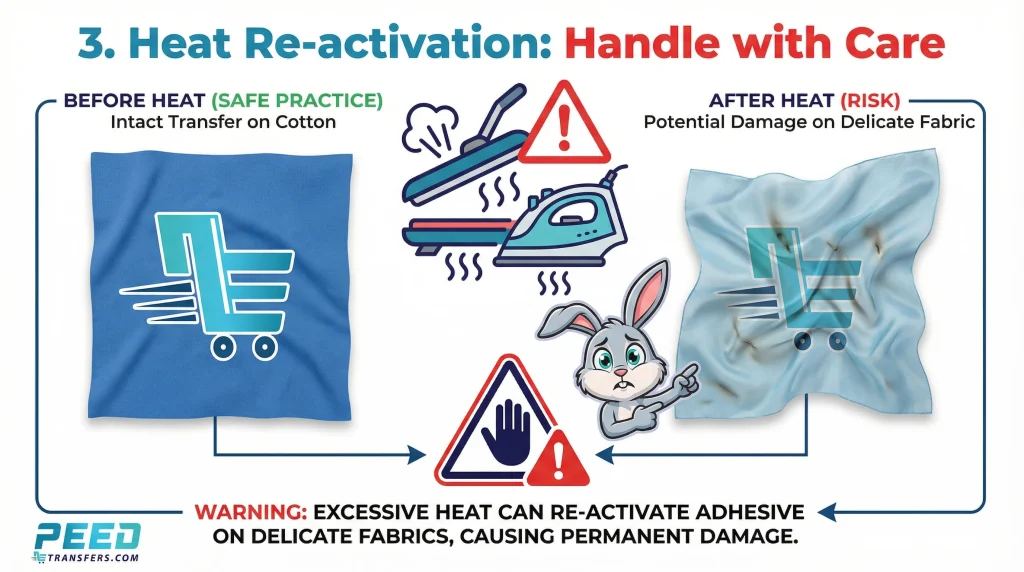
Heat Re-activation: Handle with Care
One method often attempted to Remove DTF Transfers is gentle reheating to loosen the adhesive.
- How it works: Low-temperature heat press or iron softens the adhesive
- Effectiveness: Allows partial peeling in some cases
- Fabric impact: Safer for cotton; risky for delicate fabrics
This method may help with small test pieces but rarely results in clean removal on finished garments.
Common Mistakes When Attempting DTF Removal
Many people damage garments when trying to Remove DTF Transfers by:
- Using excessive heat (scorches fabric or ink)
- Peeling aggressively (tears fibers, leaves residue)
- Applying strong chemicals (fades colors, weakens fibers)
- Ignoring fabric type (silk, rayon, blends are fragile)
- Expecting perfection (ghost images are common)
Understanding these risks is critical before attempting removal.
Ink Type Matters
The type of ink in the DTF transfer significantly affects removal potential:
- CMYK inks: Slightly more forgiving; partial removal may succeed with gentle heat.
- Neon inks: Highly sensitive; prone to fading or smearing.
- RGBO / Specialty inks (metallics, UV-sensitive): Extremely difficult to remove without damage.
- Combination transfers: The weakest ink (often neon or metallic) dictates removal risk.
Case Study: “The Misplaced Logo”
Scenario:
A client ordered 50 T-shirts with a CMYK + Neon logo. One shirt was pressed off-center.
Attempted Removal:
Gentle heat reactivation with slow, controlled peeling.
Outcome:
- Approximately 70% of the design lifted
- Neon highlights dulled, leaving faint shadows
- Fabric remained intact
Lesson:
Even with careful handling, complete removal is nearly impossible. The safest solution was replacing the shirt and reapplying the transfer.
In contrast, a small CMYK-only test logo was partially removed with minimal residue, demonstrating how ink type directly affects results.
Temperature & Washing Effects
- High heat 260°F (127°C) rarely removes a properly pressed DTF transfer and can damage fabric or ink.
- Machine washing: Hot water alone will not remove DTF; harsh detergents or bleach may damage the ink faster than they lift the adhesive.
- Cold / gentle wash: Preserves adhesion; won’t remove the design.
Takeaway: Temperature and washing alone are ineffective for removal. Prevention during application is far more effective.
How to do the perfect heat press application?
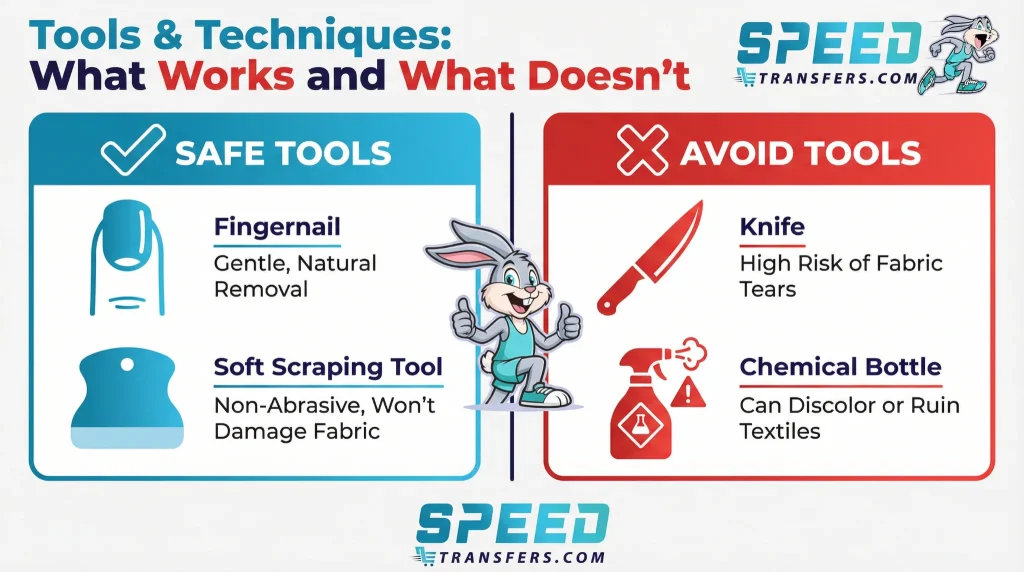
Tools & Techniques: What Works and What Doesn’t
Safe for small test areas:
- Fingernails or soft scraping tools
- Gentle reheating with heat press or iron
Avoid:
- Metal spatulas, knives, or razors (tear fabric)
- Acetone, nail polish remover, or commercial adhesive removers (fade inks, ruin fabric)
SpeedE Tip: Specialty inks like neon or RGBO require extreme caution. Partial removal attempts usually result in damage.
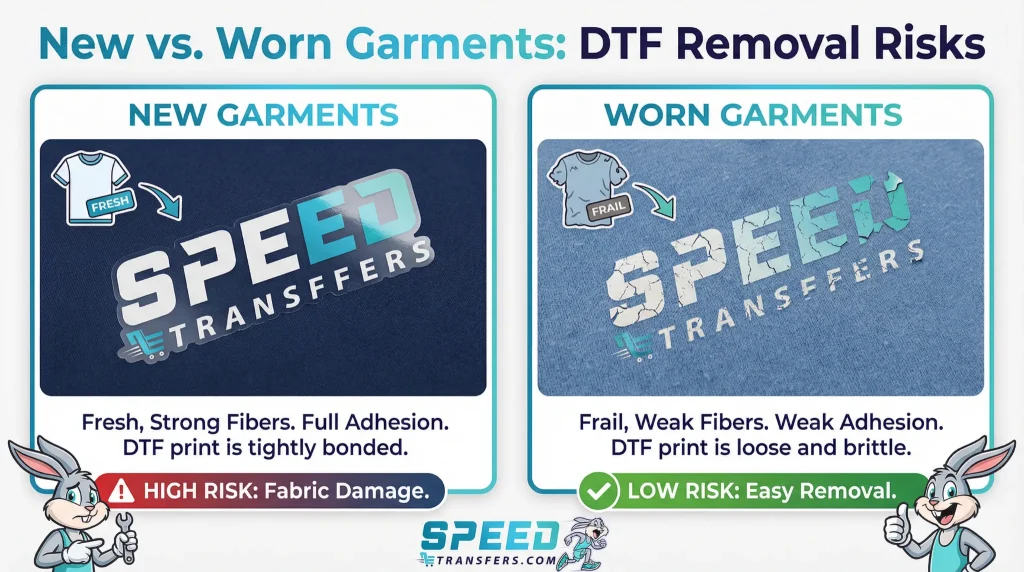
New vs. Worn Garments
- New garments: Stronger adhesion, harder to remove but safer for fabric.
- Worn garments: May lift easier in some spots, but fibers are fragile; higher risk of tearing or smearing inks.
Bottom line: Both scenarios carry risk, but removal is generally not recommended.
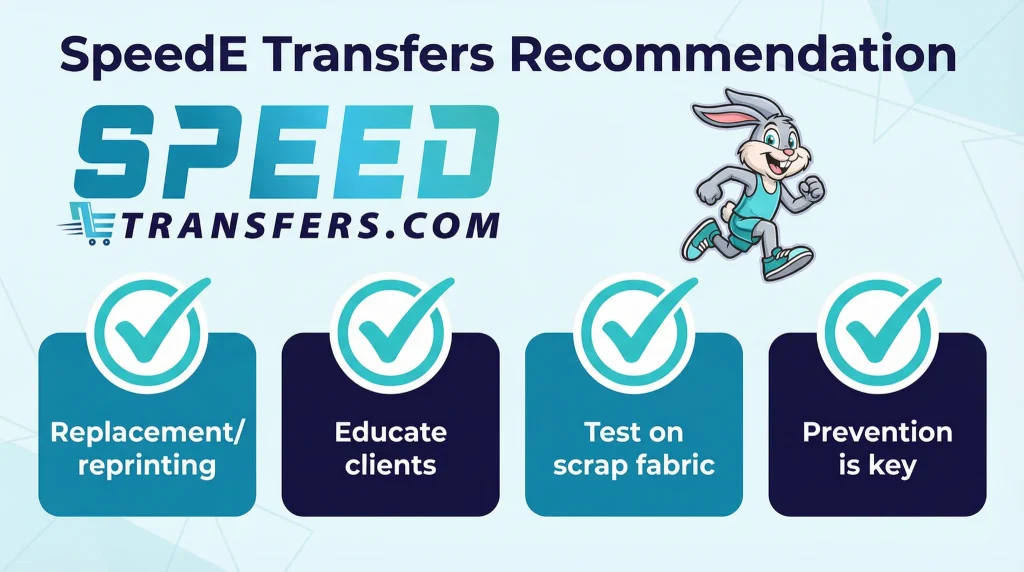
SpeedE Transfers Recommendation
From our experience:
- Removal is rarely practical for client garments.
- Replacement or reprinting ensures a perfect final product and avoids client complaints.
- Educate clients upfront about the permanence of DTF transfers to prevent risky removal attempts.
- Test on scrap fabric if experimenting, never on finished products.
Final Thoughts
DTF transfers are designed to last. While partial removal may be possible on test pieces, finished garments are best handled with replacement or reprinting. Prevention, careful placement, correct temperature, and pressure during application are the key to flawless results and happy clients.
If you’re looking for DTF transfers in Austin Texas, check out our complete guide to gang sheets and custom printing services.
Follow us on Facebook for expert DTF tips, printing updates, and behind-the-scenes content from SpeedE Transfers: SpeedEtransfers.com